Status: 🟢 Operational
Overview
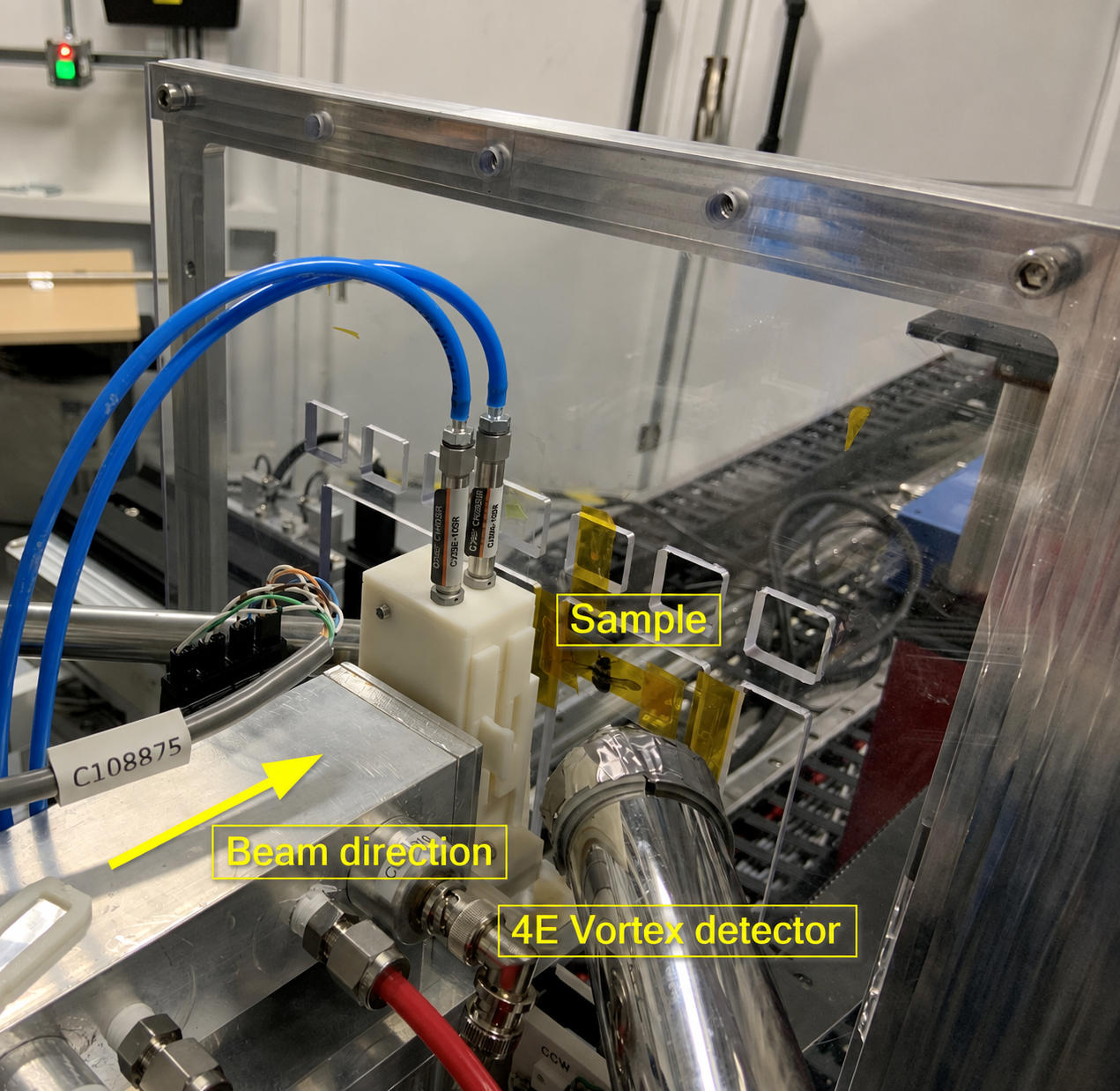
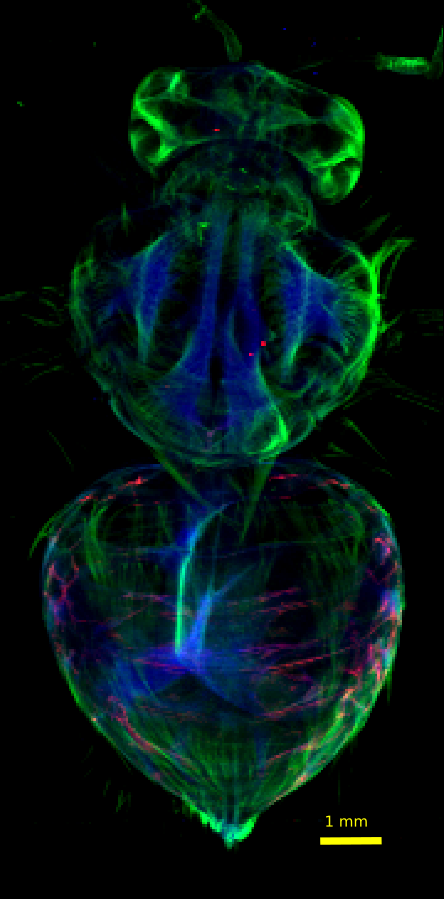
The macro resolution mode is capable of rapid XRF imaging of relatively large samples. In addition, subregions of interest can be scanned with higher spatial resolution without changing the setup. A series of pinholes, which determines the beam size, are on a motorized stage and a beam size of interest (ranging between 20 to 150 μm) can be quickly selected during the same experiment. There are two stage-configuration available depending on the sample thickness. The 45 degrees stage-configuration with respect to the incident beam are generally set up for cross-sections varying from a few μm to a couple of hundreds of μm. For thicker samples with a thickness of mm range, the 90 degrees stage-configuration is used.
Specifications
-
Four beam sizes are available between 20 and 150 μm defined by Pt or W apertures
-
Bi-directional fly scanning up to 20 ms dwell time
-
Two stage-configurations, 90 and 45 degrees, with respect to the incoming beam
-
Camera for scan setup/sample visualization
-
Samples under ambient air
Flux
The following fluxes are available with Pt aperture at 10 keV (5th harmonics). A similar flux can be obtained with the W aperture as well.
-
20 μm: 0.6 x 10¹¹ ph/s/100 mA
-
50 μm: 3.5 x 10¹¹ ph/s/100 mA
-
100 μm: 0.9 x 10¹² ph/s/100 mA
-
150 μm: 1.4 x 10¹² ph/s/100 mA
Setups
The stage configuration can be changed depending on the thickness of the sample.
Stage configuration at 45 degree
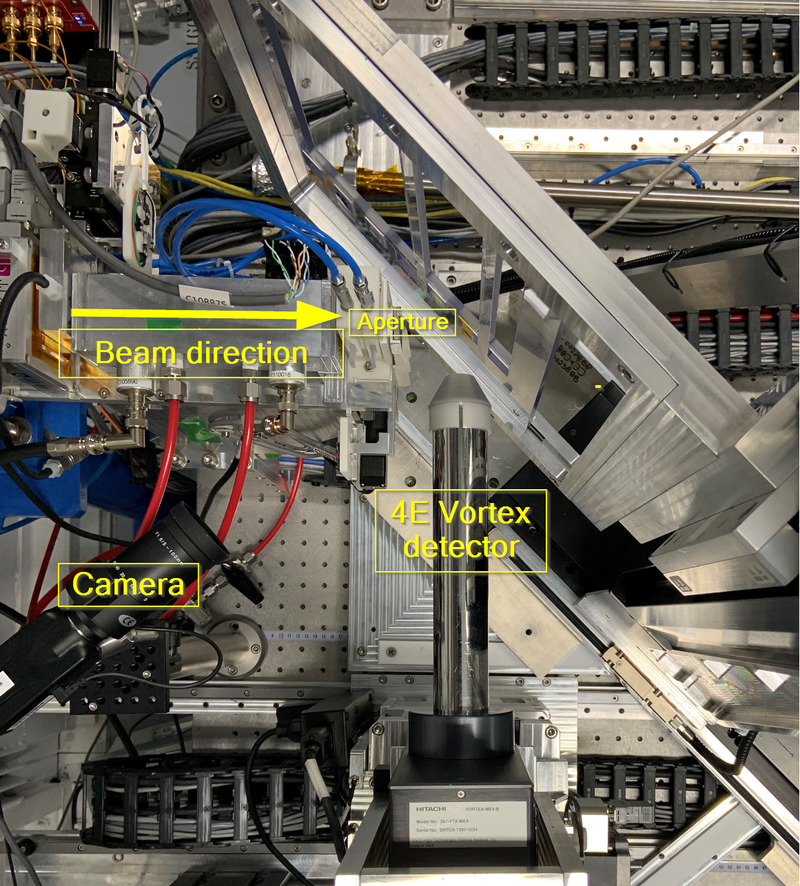
Stage configuration at 90 degree